Custom Software
Digital Transformation Roadmap for Small Businesses
Quick Answer
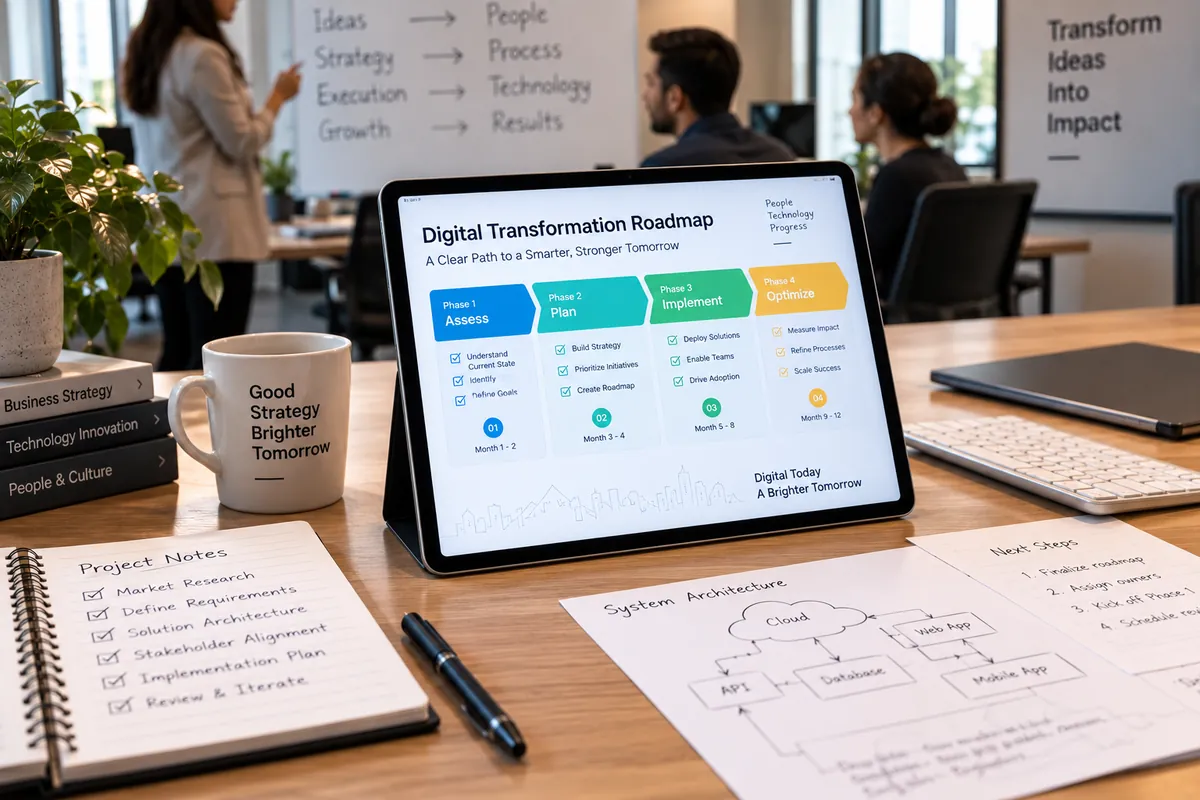
Digital transformation for a small business means improving how it sells, operates and serves customers with technology, one process at a time. A practical roadmap is: assess current processes, pick the highest-impact problem, digitise it, connect systems, use the data for decisions, then add automation and AI.
Introduction
Digital transformation sounds like a project for large corporations, but small businesses often gain the most from it. A few well-chosen changes can free hours every week, improve customer experience and make growth easier to manage.
The key is to treat it as a sequence of practical improvements rather than one big technology purchase.
Stage 1: Assess where you are
List your main processes: generating leads, selling, delivering, invoicing, collecting payments, purchasing and supporting customers. For each, note the tools used, the manual steps and the problems people complain about. This map shows where technology will help most.
Stage 2: Prioritise by impact and effort
Rank problems by how much they cost in time, errors or lost revenue, and how hard they are to fix. Start with one or two high-impact, low-effort improvements to build momentum and prove value to the team.
Stage 3: Digitise core processes
Move critical processes out of paper, WhatsApp threads and scattered spreadsheets into proper systems: a CRM for leads, accounting and inventory software, online booking or ordering, and digital payments such as UPI links and payment gateways.
Stage 4: Connect your systems
Once processes are digital, connect them so data flows automatically: website enquiries into the CRM, won deals into invoicing, payments into accounting, and orders into inventory. Integration is where most of the time savings appear.
Stage 5: Use data, then automation and AI
With connected systems you can build simple dashboards for sales, cash flow and operations. Then automate repetitive steps such as reminders, follow-ups and report generation, and introduce AI where it adds clear value, for example answering common customer questions or summarising documents.
Turn a broad transformation goal into sequenced work
Begin with customer and employee friction rather than a shopping list of technologies. Interview the people doing the work, observe handoffs and identify which delays or errors matter to the business. Rank opportunities by customer impact, operational risk, data readiness and the team’s ability to maintain a change. This exposes dependencies such as cleaning product records before automating orders.
Choose one contained initiative with a named owner, baseline, target behavior and review date. Write down what must stay reliable while the change is introduced, including access, backups, training and support. Link the pilot to the larger architecture so a local improvement does not create another isolated database. See custom software selection, cloud migration planning and Vaqnova’s custom software service.
After the pilot, compare the agreed measures with the baseline and record what changed in the process as well as the software. Scale only when users can operate the new workflow and the support owner can keep it healthy. A roadmap is a sequence of evidence-based decisions, not a promise to replace every tool at once.
Summary
Key Takeaways
- Transformation is a series of process improvements, not a single purchase.
- Start with the problems that cost the most and are easiest to fix.
- Digitise, then integrate, then automate.
- Bring the team along with training and visible early wins.
Pitfalls
Common Mistakes to Avoid
- Buying many tools at once that do not talk to each other.
- Digitising a broken process instead of improving it first.
- Skipping training, so staff fall back to old habits.
- Starting with AI before the underlying data is reliable.
FAQ
Frequently Asked Questions
How much does digital transformation cost for a small business?
It can start small: subscription tools and a few integrations. Costs grow with custom software or complex integrations, which is why prioritising by impact matters.
How long does it take?
Each stage can deliver results within weeks. A full roadmap usually unfolds over one to two years as the business adopts each change.
Do we need an in-house IT team?
Not necessarily. Many small businesses work with an external partner for build and support while a manager owns the roadmap internally.
Where should AI fit in?
After core processes are digital and data is reliable. AI works best on top of clean, connected data and well-defined tasks.
Wrap-up
Final Thoughts
A clear roadmap turns digital transformation from a buzzword into steady, measurable progress. Assess, prioritise, digitise, connect, then automate, and celebrate each improvement along the way.
References
Sources
Let's talk
Build Your Next Digital Product
Vaqnova can help you build a practical digital roadmap for your business and deliver it in manageable stages.
Talk to Our Team