Game Development
How Much Does Game Development Cost?
Quick Answer
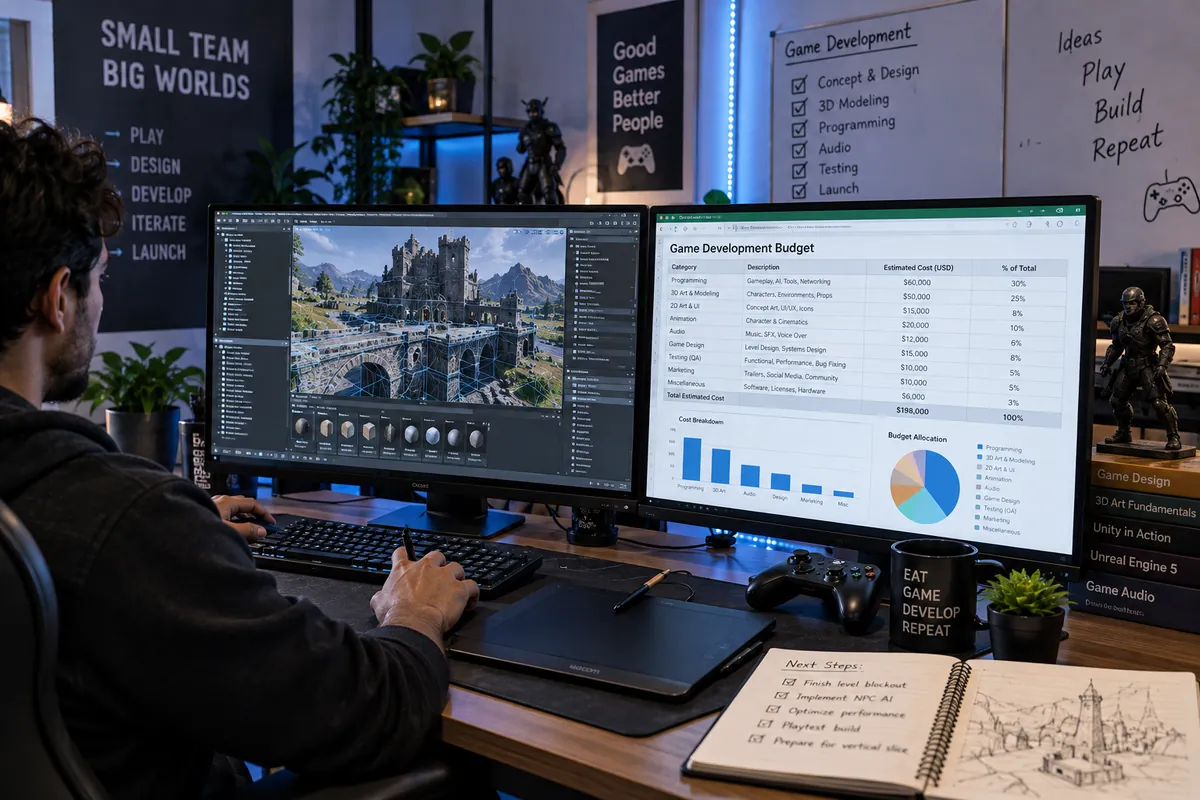
There is no reliable single game development price without defining the genre, core mechanic, platforms, art and audio scope, online features, content volume, testing and post-launch plan. Compare itemized estimates against the same playable target.
Introduction
A quote for a playable prototype is not comparable with a quote for a polished, content-complete game. The second may include original art, audio, platform builds, online services, testing, certification and post-launch fixes. Define the target deliverable before comparing the numbers.
This guide breaks down the production choices that shape an estimate and how to request a useful quote. Define the target experience and release scope before comparing proposals.
What drives game development cost
The largest cost factors are:
- Art style and asset volume: 2D vs 3D, characters, environments and animation
- Game design complexity: mechanics, levels, progression and economy
- Multiplayer and backend: matchmaking, leaderboards, accounts and anti-cheat
- Platforms: mobile, PC, console and web each add testing and optimisation
- Audio, music and voice work
- Monetisation, analytics and live operations tooling
Costs after launch
After launch, a team may need to fix defects, update supported devices, operate online services, release planned content, review player feedback and manage community channels. Which tasks apply depends on the game’s distribution and live features. List the owner and response plan for each ongoing responsibility before release.
How to control the budget
Prototype the core mechanic first and test whether it is fun before producing art at scale. Reuse proven engines and services, scope the first release tightly, and plan content updates based on player data rather than building everything upfront.
Estimate a game from its playable scope and production pipeline
A game estimate depends on the target platforms, genre, core mechanic, visual direction, amount of original art and audio, online features, content volume, accessibility, testing and release support. A small prototype and a commercial release are different deliverables. Define which one you are pricing before comparing proposals.
Ask for a breakdown by discovery, prototype, gameplay, art, audio, backend, quality assurance, certification and post-launch support. Include engine subscriptions, marketplace assets, platform accounts, localization and server operations where they apply. Review the game production process, Unity vs Unreal licensing considerations and Vaqnova’s game development service.
Request a written estimate against a feature list and playable target. A prototype can reduce uncertainty, but it does not represent the final cost of content, polish, certification or ongoing operations. Separate the estimate into deliverable milestones and clarify which assets, platforms, testing tasks and support periods are included.
Summary
Key Takeaways
- Genre, art style, multiplayer and platforms drive most of the cost.
- Prototype the core mechanic before investing in full production.
- Budget for live operations, hosting and marketing after launch.
- Compare studio quotes on detailed scope, not headline price.
Pitfalls
Common Mistakes to Avoid
- Producing all art before confirming the game is fun.
- Adding multiplayer without budgeting for servers and anti-cheat.
- Spending the entire budget before launch, leaving nothing for marketing.
- Targeting every platform at once.
FAQ
Frequently Asked Questions
Why are game quotes so different between studios?
Studios assume different levels of polish, content volume and post-launch support. Ask for a breakdown by design, art, development, audio, testing and live operations.
Is Unity or Unreal cheaper to develop with?
Engine licensing terms differ, but development cost depends far more on team skill and scope. Choose the engine that best fits the game and team.
How should a game timeline be estimated?
Break delivery into playable milestones for prototyping, core gameplay, content, platform integration, testing and release. The schedule depends on scope, team capacity, review cycles and unresolved technical risks.
How do mobile games make money?
Through ads, in-app purchases, subscriptions or premium pricing. The monetisation model should be designed into the game from the start.
Wrap-up
Final Thoughts
Game development cost reflects scope and ambition. Validate the fun early, scope the first release carefully, and reserve budget for life after launch, which is where many games find their success.
References
Sources
Let's talk
Build Your Next Digital Product
Vaqnova can scope your game idea, build a playable prototype and give you a phased estimate for production and launch.
Talk to Our Team