SaaS
SaaS Development Process Explained
Quick Answer
Building a SaaS product typically follows these stages: validate the problem with real customers, define a focused MVP, design a multi-tenant architecture, build core features with authentication, roles and subscription billing, secure and test it, launch to early customers, then iterate based on usage and feedback.
Introduction
SaaS products differ from one-off software projects. They serve many customers from one system, charge recurring fees and are never finished. That shapes how they should be planned and built.
Here is the process we recommend for founders and companies building a SaaS product.
1. Validate the problem
Talk to potential customers before writing code. Confirm the problem is painful, frequent and worth paying for, understand how they solve it today, and test willingness to pay with a landing page, prototype or pre-orders.
2. Define the MVP
Choose the smallest set of features that delivers the core value to one customer segment. Write user stories with acceptance criteria and keep a backlog for everything else. A focused MVP reaches paying customers sooner and shows what to build next.
3. Design the architecture
Key early decisions include:
- Multi-tenancy model: shared database with tenant separation, or separate databases per customer
- Authentication, single sign-on and role-based permissions
- Subscription billing, plans, trials and invoices with GST where applicable
- Cloud hosting, environments and automated deployment
- Logging, monitoring and backups
4. Build, secure and test
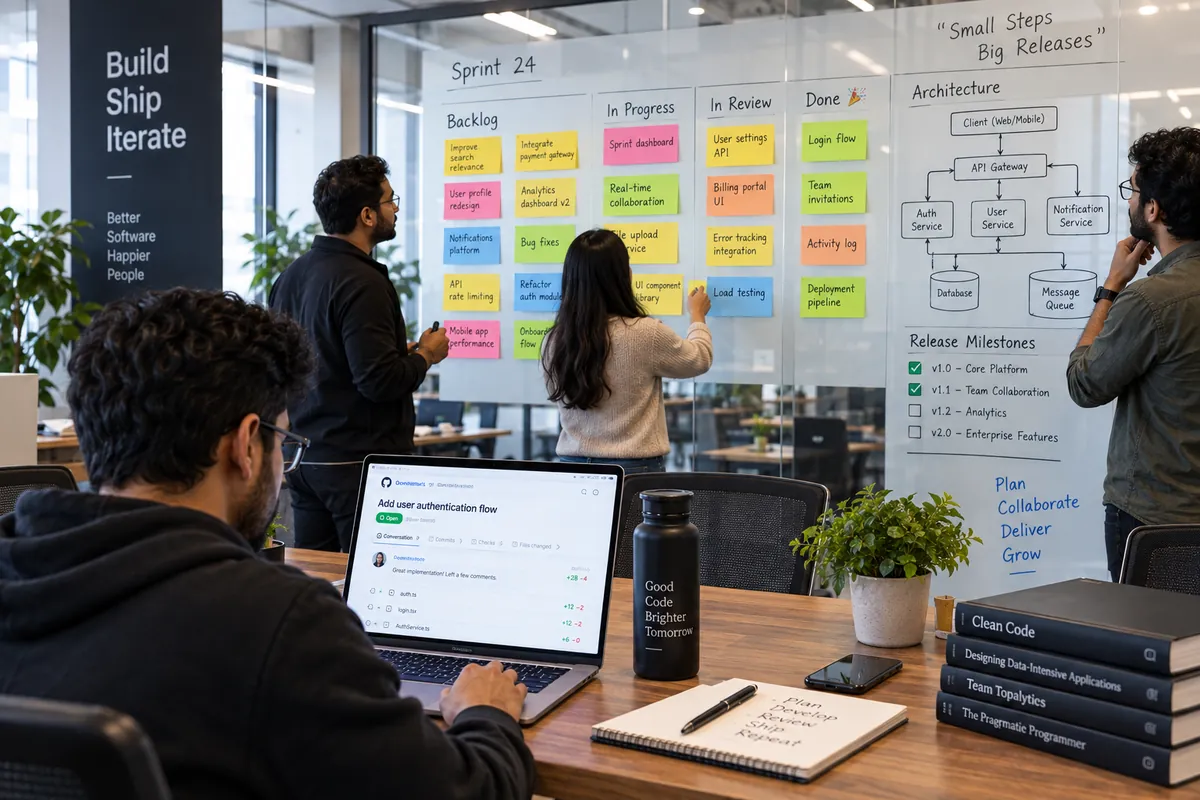
Build in short iterations with working software reviewed every one to two weeks. Bake in security from the start: tenant data isolation, encryption, input validation and audit logs. Automate testing for critical flows such as sign-up, billing and permissions.
5. Launch and iterate
Launch to a small group of early customers, onboard them personally, and instrument product analytics to see which features are used. Track activation, retention and churn, and prioritise the roadmap using real usage and feedback.
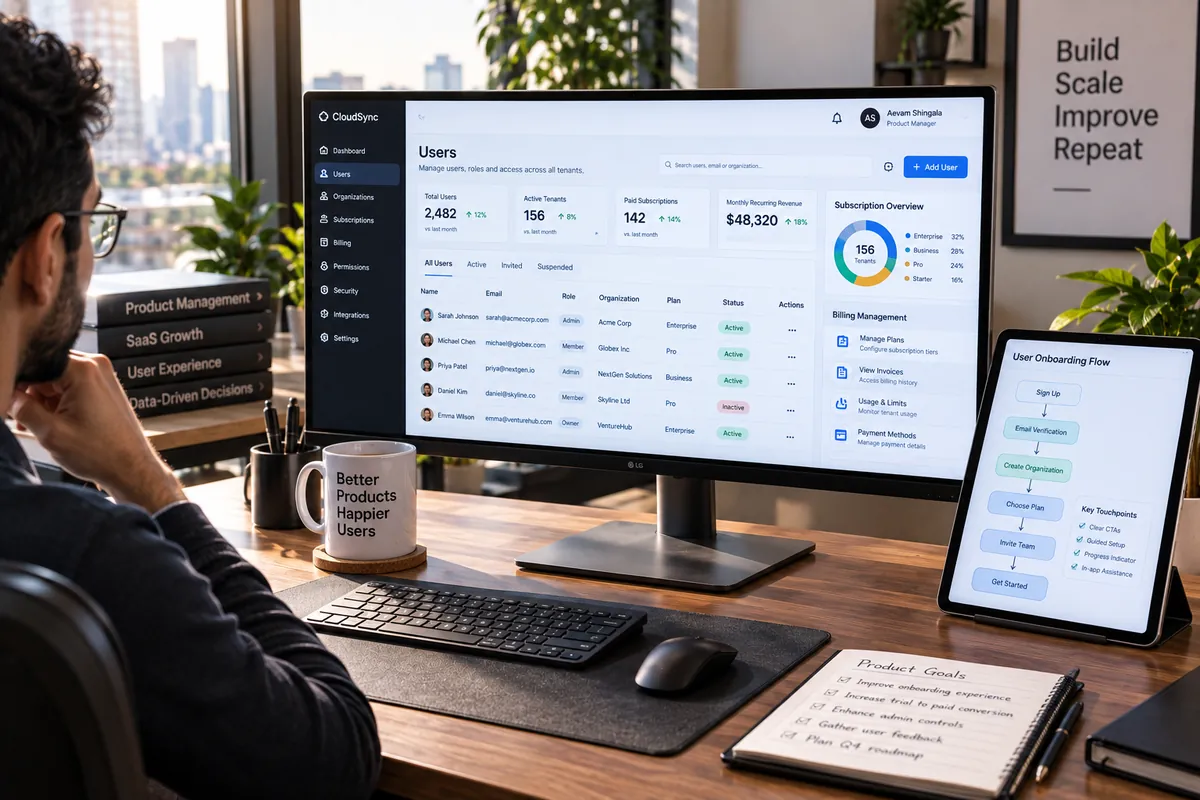
Prove one complete tenant journey before broadening the product
A useful prototype should follow one organization from signup through setup, a core task, billing state and account closure. This reveals product work that a feature list misses: tenant provisioning, permission defaults, incomplete setup, failed payments and data export. Test the journey with realistic roles rather than only an administrator account.
Keep architecture decisions tied to the next verified need. A shared database can require strong tenant-aware authorization; separate resources can change isolation and operating costs. Review SaaS product essentials, cost planning and Vaqnova’s SaaS project service.
Instrument onboarding and support issues, then prioritize improvements based on observed friction. Do not add complex billing tiers or tenant customization before confirming how customers use the core service. Every release also needs a migration and rollback plan for customer data.
Summary
Key Takeaways
- Validate demand and willingness to pay before building.
- Keep the MVP focused on one segment and one core job.
- Get multi-tenancy, authentication and billing right early.
- Launch small, measure usage and iterate continuously.
Pitfalls
Common Mistakes to Avoid
- Building for every possible customer type at once.
- Leaving billing and permissions until late in the project.
- Weak tenant isolation that risks one customer seeing another's data.
- No product analytics at launch.
FAQ
Frequently Asked Questions
How long does it take to build a SaaS MVP?
Typically three to six months for a focused MVP with authentication, core features, billing and an admin panel, depending on complexity.
Which tech stack is best for SaaS?
Choose a well-supported stack your team knows, such as React or Next.js with Node.js, Python or Laravel, a managed PostgreSQL database and a major cloud provider.
How do SaaS products handle payments in India?
Through payment gateways that support recurring billing, such as Razorpay or Stripe, with GST-compliant invoices and, where needed, UPI AutoPay or card mandates.
Should a SaaS be single-tenant or multi-tenant?
Most SaaS products start multi-tenant for efficiency. Single-tenant or dedicated deployments are offered for enterprise customers with strict isolation needs.
Wrap-up
Final Thoughts
A SaaS product is a long-term service, not a one-time build. Validate first, launch a focused MVP on solid architecture, and let customers guide what comes next.
References
Sources
Let's talk
Build Your Next Digital Product
Vaqnova builds SaaS products from validation and MVP to scalable multi-tenant platforms with billing and analytics.
Talk to Our Team