SEO
Complete On-Page SEO Guide for 2026
Quick Answer
On-page SEO means optimising each page so it matches search intent and is easy for people and search engines to understand. The core elements are a focused topic, a compelling title tag, one clear H1, helpful content that answers the query, logical headings, internal links, optimised images, structured data and a fast, mobile-friendly experience.
Introduction
On-page SEO is everything you control on the page itself. It is where most businesses can make the quickest improvements, because it does not depend on other websites linking to you.
This guide covers each element and how to get it right in 2026, when search engines and AI systems both evaluate your pages.
Start with search intent
Before writing, search the target query and study the results. Are they guides, comparisons, product pages or local listings? Decide what the searcher wants to do and make that the page's job. One page should target one main topic and its closely related queries.
Title tags and meta descriptions
The title tag is still one of the strongest on-page signals and the first thing searchers see. Put the main topic near the start, keep it roughly under 60 characters, and make it specific and compelling. Write a unique meta description of about 150 characters that summarises the value of the page; it does not affect ranking directly but influences clicks.
Headings and structure
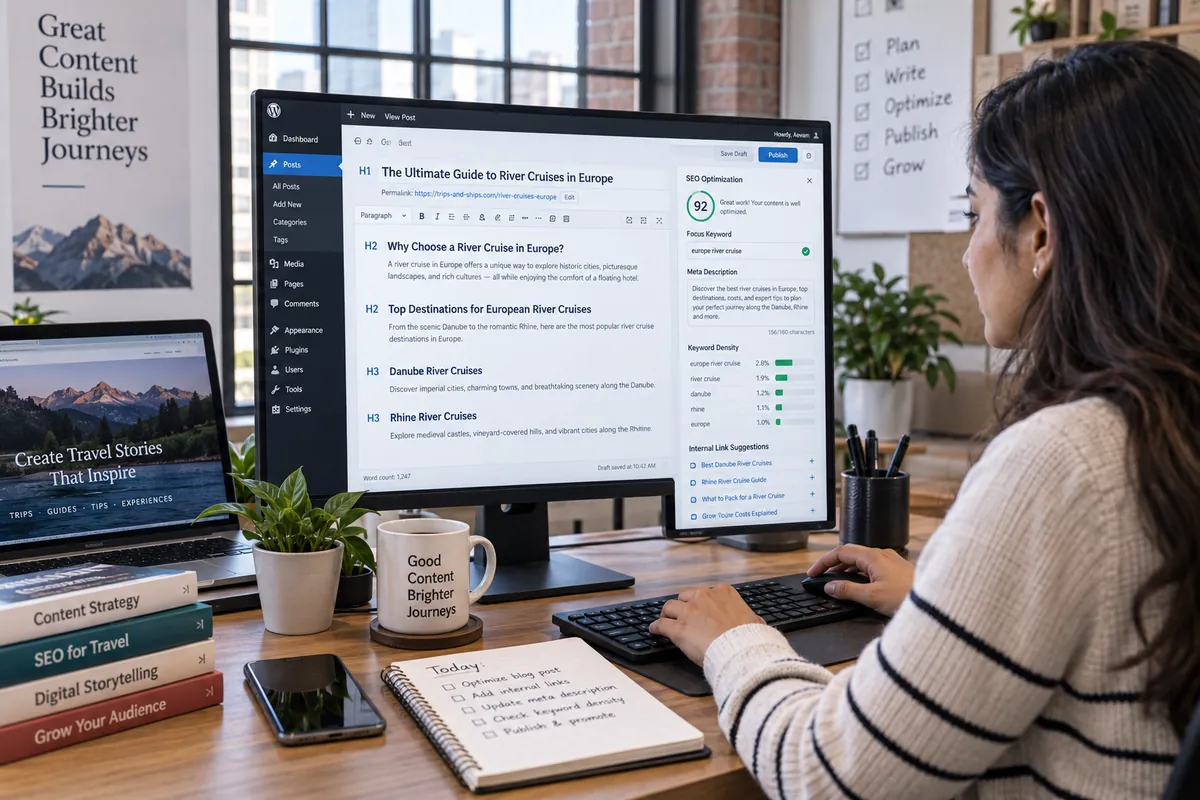
Use one H1 that states the page topic. Break the content into sections with H2 and H3 headings that describe what each section answers. Good structure helps readers scan, helps search engines understand subtopics, and helps AI systems extract answers.
Content that earns rankings
Helpful content usually shares these traits:
- A direct answer near the top, followed by depth.
- Specific details: numbers, examples, steps and trade-offs.
- Evidence of real experience, such as photos, results or a named author.
- Up-to-date information with a visible last-updated date.
- No filler, keyword stuffing or text copied across many pages.
Internal links, images and schema
Link to related pages with descriptive anchor text, and link important pages from your navigation and articles. Compress images, use descriptive file names and alt text, and set width and height to prevent layout shift. Add structured data that matches the page, such as BlogPosting, Service, Product, FAQPage or BreadcrumbList.
Audit on-page elements against a real search task
For a target page, write the question it should answer, the intended reader and what a useful next step looks like. Check that the title, visible heading, opening text and page content support that same purpose. Headings should organize meaningful sections rather than repeat variants of a keyword, and links should explain where they lead.
Review search snippets and query data after the page has been crawled, then update where there is a clear mismatch or missing answer. Pair this with technical SEO checks, Google AI search guidance and Vaqnova’s SEO service.
A strong on-page setup cannot make an unhelpful page valuable by itself. Keep claims accurate, remove sections that do not serve the reader and use structured data only when it accurately describes visible content. Changes should be measured over time rather than judged by an SEO plugin score.
Summary
Key Takeaways
- Match the page to search intent before optimising anything else.
- Write specific title tags and one clear H1 per page.
- Lead with direct answers and support them with specific detail.
- Use internal links, optimised images and accurate structured data.
- Keep content updated and free of duplication.
Pitfalls
Common Mistakes to Avoid
- Several pages targeting the same keyword and competing with each other.
- Identical title tags or meta descriptions across pages.
- Keyword stuffing that makes text awkward.
- Missing alt text and oversized images.
FAQ
Frequently Asked Questions
How long should a page be for SEO?
As long as needed to satisfy the intent and no longer. Compare with top-ranking pages and focus on completeness and clarity, not word count.
Do keywords still matter?
Yes, but as topics rather than exact phrases. Use the terms your customers use naturally in titles, headings and content.
How often should I update content?
Review important pages at least once or twice a year, and update immediately when prices, processes or facts change.
Does FAQ schema still help?
Google shows FAQ rich results only for a limited set of sites, but FAQ content and markup still help structure answers for search engines and AI systems when the questions are visible on the page.
Wrap-up
Final Thoughts
On-page SEO is the part of search you fully control. Get the intent right, structure pages clearly, write with specific expertise and connect your pages well, and every other SEO effort becomes more effective.
References
Sources
Let's talk
Build Your Next Digital Product
Vaqnova can optimise your key pages for search intent, structure and schema, and build a content plan around the topics your customers search.
Talk to Our Team