E-commerce
How to Build a Successful eCommerce Store

Quick Answer
A successful online store starts with a clear niche and customer, a platform that fits your catalogue and growth plans, excellent product pages, a fast mobile checkout with local payment options such as UPI, reliable shipping and returns, solid SEO, and a plan to bring visitors and repeat customers after launch.
Introduction
Launching an online store is easier than ever; building one that sells consistently is harder. Success depends less on the platform and more on product presentation, trust, checkout experience, operations and marketing.
This guide covers the decisions and building blocks that matter most, with notes specific to selling in India.
Define your niche and customer
Be clear about who you sell to, why they would buy from you instead of a marketplace, and what makes your offer different: range, quality, price, expertise or service. That positioning should shape the design, product content and marketing.
Choose the right platform
Hosted platforms such as Shopify are quick to launch and easy to manage. WooCommerce suits businesses already on WordPress that want flexibility. Custom or headless builds suit large catalogues, complex pricing, B2B ordering or deep integrations. Choose based on catalogue size, required integrations, team skills and growth plans.
Make product pages sell
Product pages do the work of a salesperson:
- Clear, high-quality photos from several angles, plus video where useful
- Specific descriptions that answer real buyer questions
- Accurate price, stock status, delivery estimate and return policy
- Reviews and ratings from genuine customers
- Size guides, specifications and related products
Checkout, payments and shipping
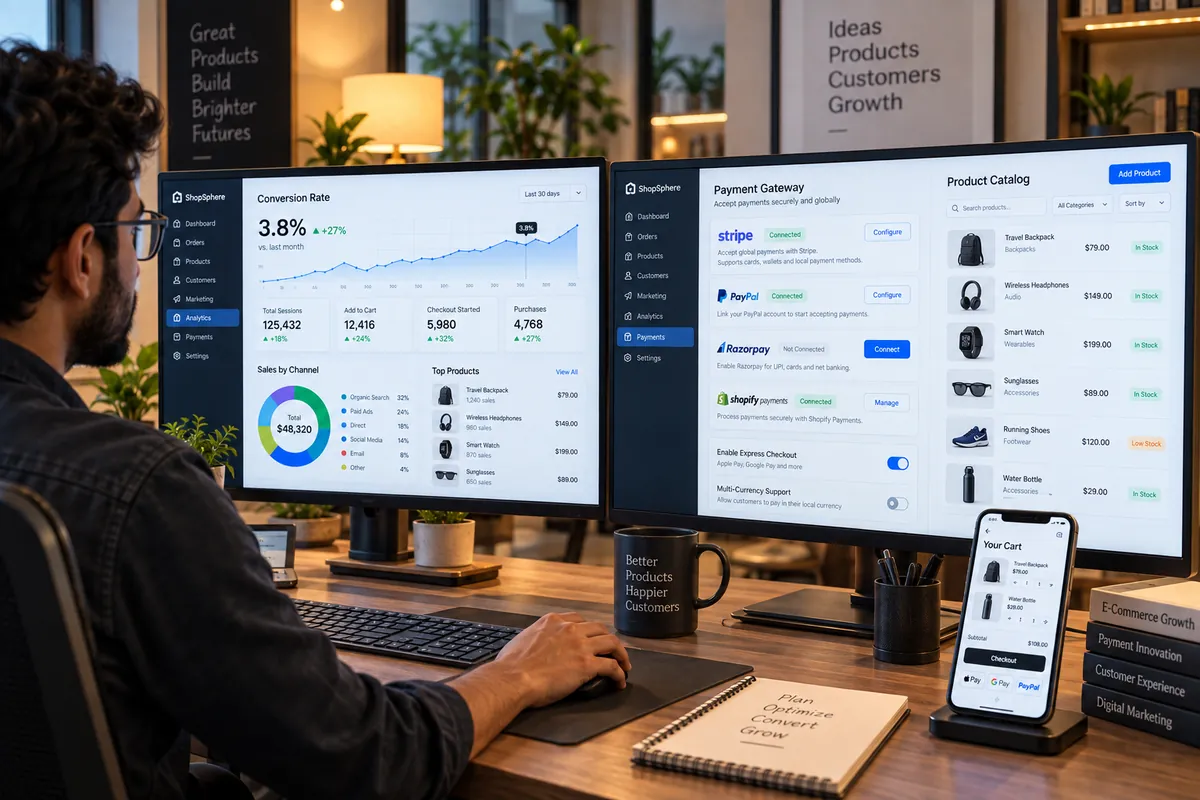
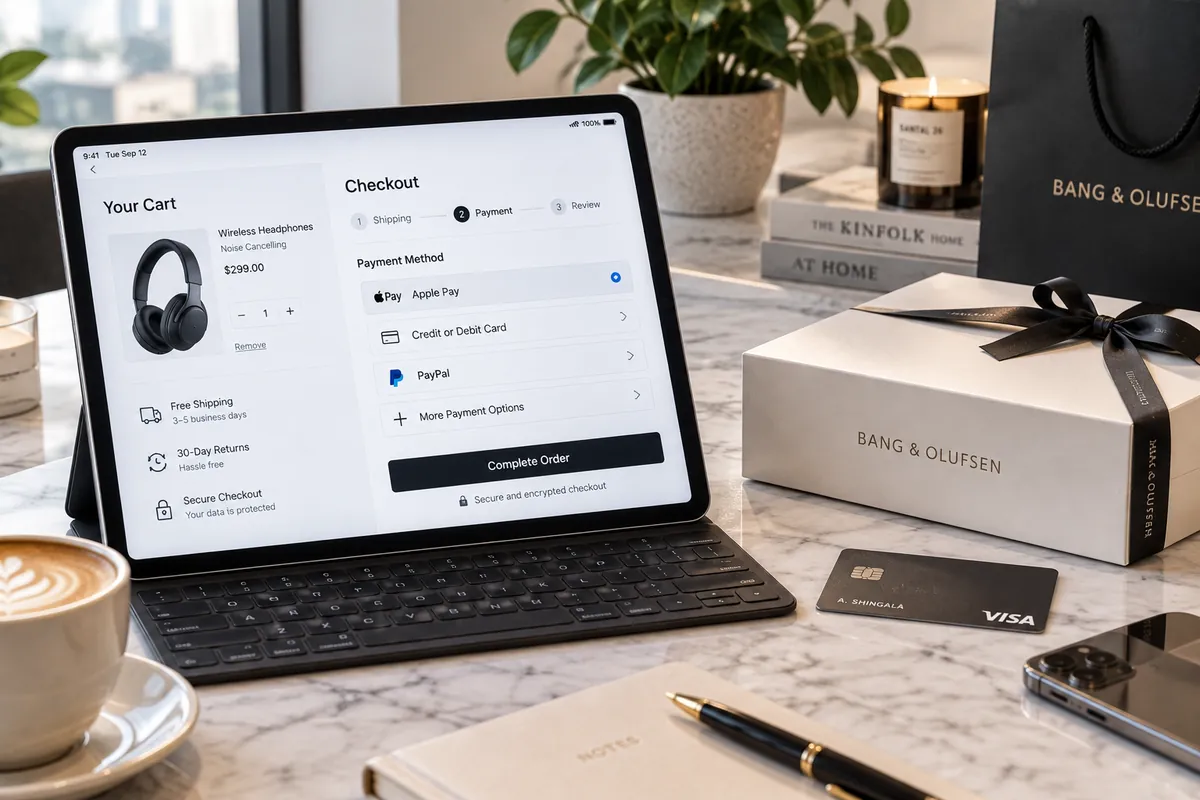
Keep checkout short, allow guest checkout, and offer the payment methods customers use: UPI, cards, net banking, wallets and, where it makes sense, cash on delivery. Integrate a reliable payment gateway and shipping aggregator, show delivery dates upfront, and make returns simple. Issue GST-compliant invoices automatically.
SEO, speed and growth after launch
Use clean category and product URLs, unique descriptions, Product schema and fast mobile pages. After launch, grow through search, social media, email and WhatsApp marketing, and retention programmes. Track conversion rate, average order value, repeat purchase rate and acquisition cost.
Validate the buying journey with real catalog and delivery data
Select a representative group of products and test the full path: discovery, product details, variant selection, stock status, delivery information, checkout, confirmation and returns. Use real edge cases such as unavailable stock, different delivery areas and an invalid address. A store that succeeds only on the simplest product is not ready for a wider catalog.
Assign ownership for product data, order exceptions, payment reconciliation and customer questions. Confirm that price, availability and shipping terms stay consistent between the product page and checkout. Continue with checkout requirements, store feature planning and Vaqnova’s e-commerce service.
Before launch, place test orders through each payment and fulfillment path, verify notification content and practice a refund. Track completed orders and operational errors after release; conversion rate alone cannot explain whether the business can fulfill what the storefront promises.
Summary
Key Takeaways
- Positioning and product presentation matter more than the platform.
- Choose a platform for your catalogue, integrations and growth plans.
- A short mobile checkout with UPI and clear delivery dates converts better.
- SEO, speed and retention marketing drive growth after launch.
Pitfalls
Common Mistakes to Avoid
- Copying manufacturer descriptions used on hundreds of other sites.
- Hidden shipping costs revealed only at checkout.
- Forcing account creation before purchase.
- Launching with no plan to bring traffic.
FAQ
Frequently Asked Questions
Which platform is best for a new store in India?
For most new stores, a hosted platform like Shopify or WooCommerce on good hosting is the quickest start. Custom builds make sense for complex catalogues, B2B or heavy integrations.
Should I sell on marketplaces too?
Many brands use marketplaces such as Amazon and Flipkart for reach and their own store for margin, brand control and customer relationships.
Do I need cash on delivery?
It can increase conversions in some categories and regions, but it raises return-to-origin risk. Many stores offer it with order verification or limits.
How long does it take to build an online store?
A theme-based store can launch in a few weeks. Custom designs or custom-built platforms usually take two to four months.
Wrap-up
Final Thoughts
A successful store combines a clear offer, persuasive product pages, a frictionless checkout and dependable fulfilment. Launch with these foundations, then grow through search, marketing and repeat customers.
References
Sources
Let's talk
Build Your Next Digital Product
Vaqnova builds e-commerce stores on Shopify, WooCommerce or custom platforms, with Indian payments, shipping and SEO set up properly.
Talk to Our Team