Agentic AI
Agentic AI vs Traditional AI: What's the Difference?
Quick Answer
Traditional AI performs a single, narrow task such as predicting, classifying or recommending, and returns a result for people or software to act on. Agentic AI pursues a goal over multiple steps, deciding which actions to take and using tools to carry them out. Traditional AI informs decisions; agentic AI executes work.
Introduction
The term AI covers very different technologies. A fraud detection model, a chatbot that writes emails and an agent that resolves support tickets end to end are all called AI, but they work differently and suit different problems.
Understanding the difference helps you choose the right approach and set realistic expectations.
Traditional AI: narrow and predictive
Traditional machine learning models are trained for one task: predicting demand, scoring credit risk, detecting fraud, classifying images or recommending products. They are often highly accurate within that task, fast and inexpensive to run, but they do not plan or act on their own.
Generative AI: creating content on request
Generative models such as large language models create text, images or code in response to a prompt. Used as assistants, they help people write, summarise and analyse, but each interaction is a single request and response.
Agentic AI: goal-driven and multi-step
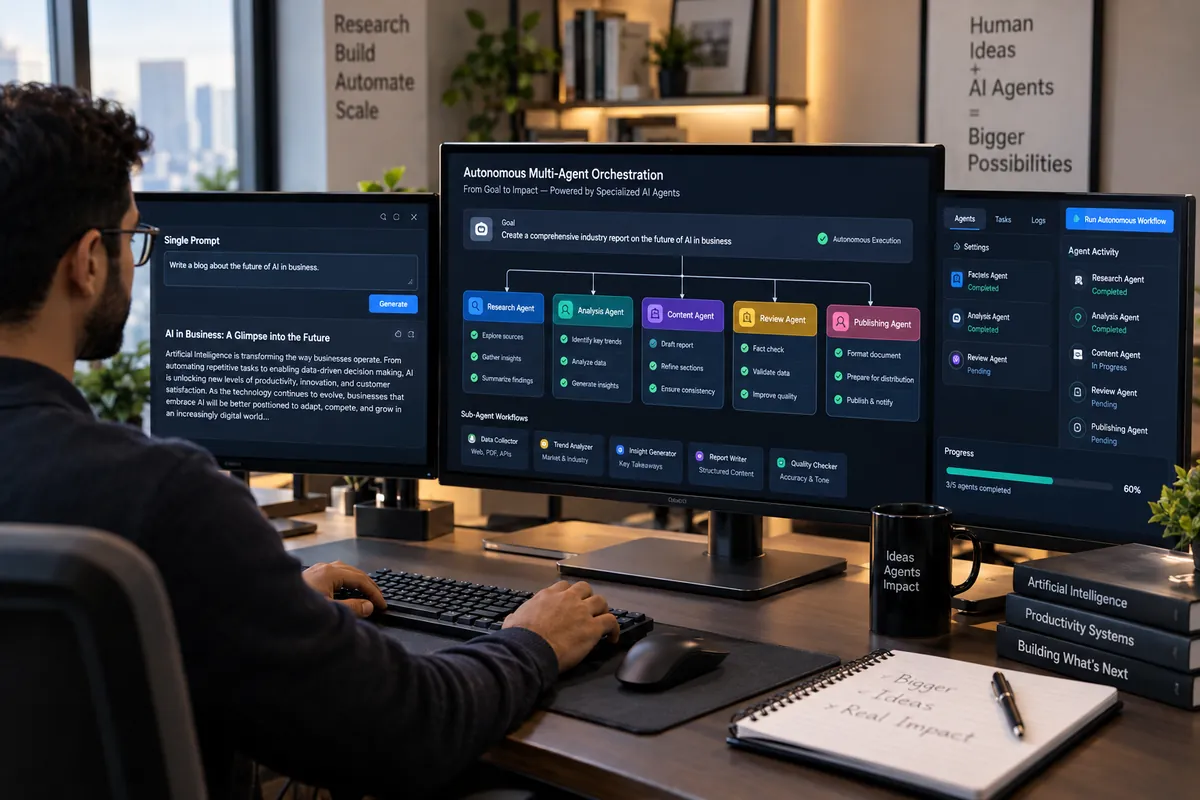
Agentic AI wraps a language model in a loop with tools, memory and instructions. Given a goal, it breaks the task into steps, gathers information, takes actions in other systems, evaluates the results and adjusts. It can handle open-ended requests that would otherwise need a person to coordinate several tools.
Choosing the right approach
Use traditional models when you need precise, repeatable predictions on structured data at scale. Use generative assistants to speed up individual knowledge work. Use agentic AI when a task spans several systems and steps, and the steps vary from case to case. Many solutions combine them, for example an agent that calls a forecasting model as one of its tools.
Governance differs too
Because agents take actions, they need stronger controls than predictive models: scoped permissions, approval steps for high-impact actions, audit logs and ongoing evaluation of their decisions.
Choose autonomy only where the task benefits from it
A useful comparison starts with the task’s decision structure. A classifier that labels support requests follows a narrow output contract; a scripted workflow moves data through known steps; an agent can select tools and next actions based on the request and what those tools return. More flexibility can handle variation, but it creates a larger space of possible behavior to evaluate.
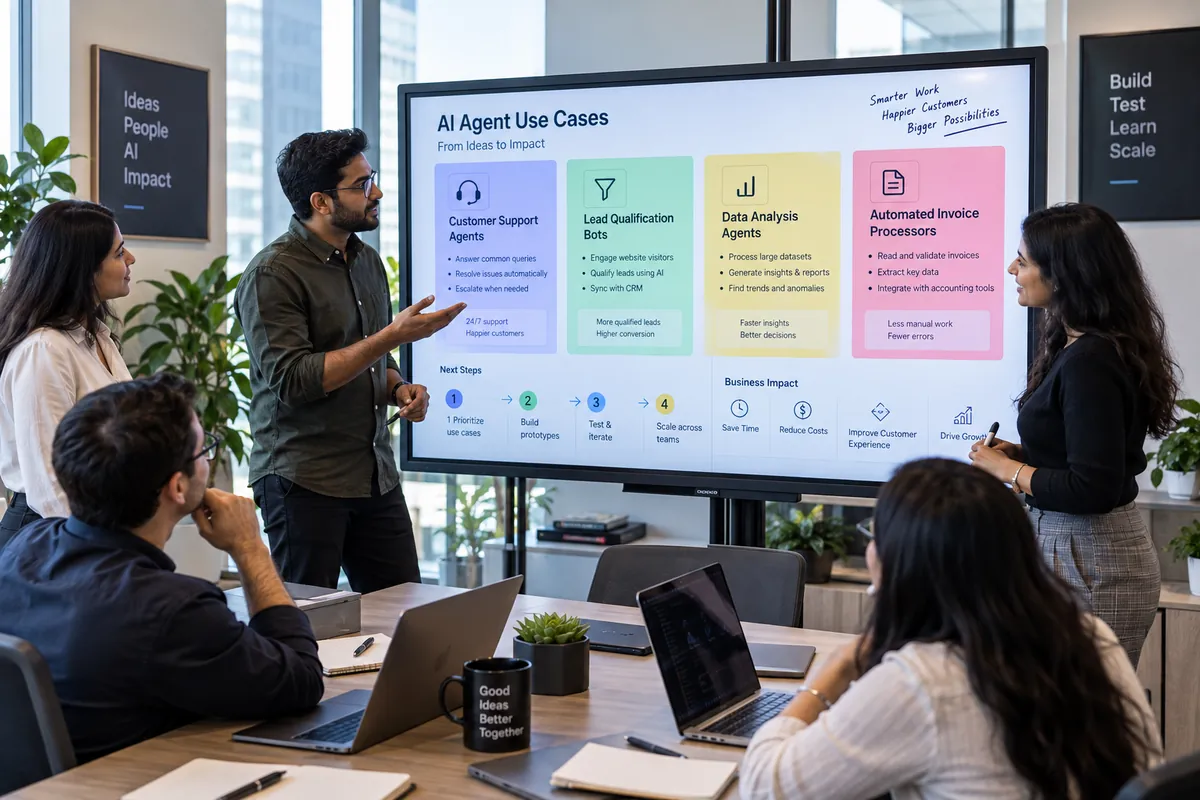
Write down the acceptable actions and prohibited ones, then compare a fixed workflow with an agent prototype using the same test cases. If both solve the task, the simpler design may be easier to operate. For practical examples, see AI agent use cases, customer support agent boundaries and Vaqnova’s agentic AI service.
Autonomy should be proportional to the impact of an error. Keep approval for consequential actions, make tool permissions narrow and define escalation when the input is unclear. These controls do not remove risk, but they make the system’s authority explicit and easier to review.
Summary
Key Takeaways
- Traditional AI predicts or classifies; agentic AI plans and acts.
- Generative assistants sit in between, creating content on request.
- Choose based on whether you need a prediction, a draft or a completed task.
- Agents require stronger governance because they act in your systems.
Traditional AI vs agentic AI
| Aspect | Traditional AI | Agentic AI |
|---|---|---|
| Scope | One narrow task | A goal spanning many steps |
| Output | Prediction, score or label | Completed actions and results |
| Autonomy | None; people or software act on output | Decides and executes steps within limits |
| Data | Mostly structured, task-specific | Documents, systems and tools |
| Typical uses | Forecasting, fraud, recommendations | Support resolution, research, operations tasks |
| Key controls | Model accuracy and drift monitoring | Permissions, approvals, logs, evaluation |
Pitfalls
Common Mistakes to Avoid
- Using an agent where a simple predictive model or rule would be more reliable.
- Expecting a forecasting model to explain or act on its predictions.
- Ignoring governance when moving from assistants to agents.
- Treating all AI as interchangeable.
FAQ
Frequently Asked Questions
Is agentic AI more accurate than traditional AI?
Not necessarily. For narrow predictive tasks, specialised models are often more accurate. Agentic AI is better for flexible, multi-step work.
Can traditional AI and agents work together?
Yes. An agent can call predictive models as tools, for example checking a fraud score before approving a refund.
Is ChatGPT agentic AI?
Chat assistants are generative AI. When they are given tools and allowed to take multi-step actions, such as browsing or operating software, they behave agentically.
Which should a small business start with?
Usually generative assistants for staff productivity, then a focused agent for one repetitive process once data and tools are ready.
Wrap-up
Final Thoughts
Traditional AI tells you what is likely; agentic AI gets things done. Most businesses will use both, and the skill lies in matching each problem to the right kind of AI with the right level of control.
References
Sources
Let's talk
Build Your Next Digital Product
Vaqnova helps businesses choose between predictive models, AI assistants and agents, and builds the solution that fits the problem.
Talk to Our Team